Forum Discussion


eubank
Jan 12, 2014Explorer
These systems are designed to hold pressure, with the pump pressurizing the system. It should stay that way until such time that you open a faucet, depressurizing the system and starting the pump.
Momentary (or extended) pump runs while the faucets are off generally mean that there is something allowing the pressure in the system to go down. Often this means a leak in the pipes or faucets. If so, you should find a tell-tale puddle someplace. If your system has cut-offs below sinks, etc., you can use them to help isolate the problem.
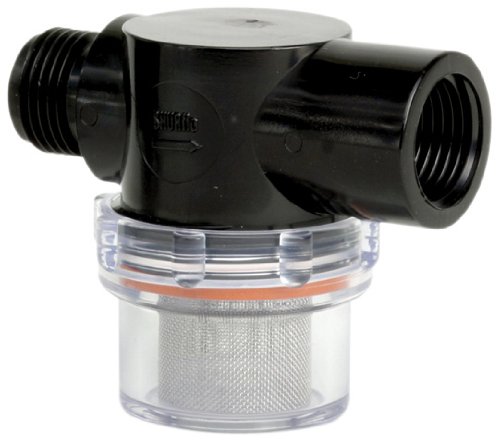
Another cause of this kind of failure can be within the pump itself. If the diaphragm is damaged, it can allow a very small amount of water to escape backwards through the pump, and you will be unable to locate any tell-tale puddle of water. The damage can result from even a small grain of sand stuck in the diaphragm. It is for this reason that RVs (should) have a small strainer installed between the pump and the fresh-water tank, like this one:
Ok, so your process should go like this:
1. Check for leaks in pipes, valves, and faucets. This will require some crawling around and feeling for a small bit of unexplained water.
2. Check the pump itself. If it is bad, order a new one along with a strainer to locate between the pump and the fresh-water tank.
:)
Lynn
Momentary (or extended) pump runs while the faucets are off generally mean that there is something allowing the pressure in the system to go down. Often this means a leak in the pipes or faucets. If so, you should find a tell-tale puddle someplace. If your system has cut-offs below sinks, etc., you can use them to help isolate the problem.
Another cause of this kind of failure can be within the pump itself. If the diaphragm is damaged, it can allow a very small amount of water to escape backwards through the pump, and you will be unable to locate any tell-tale puddle of water. The damage can result from even a small grain of sand stuck in the diaphragm. It is for this reason that RVs (should) have a small strainer installed between the pump and the fresh-water tank, like this one:
Ok, so your process should go like this:
1. Check for leaks in pipes, valves, and faucets. This will require some crawling around and feeling for a small bit of unexplained water.
2. Check the pump itself. If it is bad, order a new one along with a strainer to locate between the pump and the fresh-water tank.
:)
Lynn
About RV Tips & Tricks
Looking for advice before your next adventure? Look no further.25,199 PostsLatest Activity: Jun 10, 2026


