Hi bluie5,
I may be able to help as I had to work through this with my F350 which is now rock solid.
bluie5 wrote:
Pulled my trailer for the first time with my new 2016 Ford F-350 and it didn't handle no where near as well as I thought it would. WDH down one link and felt like front end floating. Stopped and set WDH down two links, moving more weight forward, and felt better but still like the front end floating.
What am I missing? I thought that a 1 ton truck would handle so much better with what is basically little weight compared to what the maximum payload is. Do I tilt the ball back to move weight forward or tilt ball towards truck? Hitch was set up for my 2011 Ram 2500.
bluie5 wrote:
Sorry for the delay getting back to everyone. The KOA wifi kinda sucks. Hitch height was the same for both trucks. I went with two links off with the Ram that's why I thought only one link off with the 350. Will try on the way home with no bars. I never thought about the tires being new having anything to do with it. I'll report back Wednesday or Thursday when we get home. Thanks.
There are a few things that are not totally in line with your way of thinking. I looked up your camper, nice camper by the way, congrats.
37' 3" long, 7,710# dry GVW with a dry 920# TW, That is 12% dry TW as a point of reference. It has a GVWR of 9,975# or basically a 10K trailer.
Those trailer weights are about the same as my camper, just I am at 33 1/2 ft and a different floor plan. Fully loaded I have a 1,600# TW and I am just under 10,000#. Basically fully loaded.
On your setup, you really cannot compare the RAM setup to the F350. You need to start the WD hitch setup all over again, with a loaded camper and a loaded truck bed.
Do you have the diesel or the gasser? The 2 will react different with the gasser needing to be dialed in a little closer as the diesel is just heavier and has more weight up front.
I do not recommend you tow with no WD bars, that is not going to fix this. What hitch brand and type and WD bar size do you have and what anti sway device? With a 37ft camper the setup has to be dead on.
I found on mine, if I had a very light bed load and I tried to adjust the front of the truck back to unhitched height, I was way up in the suspension and the back to the truck was not stable. This was with only a 1,200# TW at the time in my loading process.
What I found that made the setup very solid is this. Reset the WD hitch from the ground up. Start over. Load the truck bed and cab as you will go camping. With full fuel. Get front and rear fender heights unhitched. Go down through the center of the wheel, ground to inside fender through the center of the wheel.
Hitch up the camper and have it loaded like you are going camping. Adjust the WD hitch, head tilt back and chain hooks so that the front end is approx 1/2" to maybe 1" above unhitched as a starting place. I do not know what brand hitch and style so I can't get more specific on the setup
Now go look at the rear overloads on the truck. The rear overload ideally needs to kiss the frame hanger. The front overload can be off the frame hanger or on it. Ideally you have 500# of cargo in the bed to make this overload relationship happen with your loaded camper TW. When the top rear overload kisses that frame bracket, there will be a global shift in truck stability better, more stable. They are acting like a rear roll bar.
The TT needs to be level or slight nose down. Adjust the hitch shank up of down until you level out the camper. The front of the truck may be 100 to 150# lighter then unhitched but that is OK on this F350.
What you really do not want, is the front end back at unhitched and inches away from the rear overloads. 1 ton truck or not, that high up in the suspension with a heavy camper TW, the camper will move the truck.
Ever since I created the rear overload relationship, this truck has been dead solid, even with new tires. I also run my tires at door sticker for a full GVWR weight of the truck to add stiffness. I do not know what size you have so my pressures may be different then yours.
Here is what I mean on the overloads. You can be more loaded, not a problem, less loaded may be a problem.
Top overload in contact with frame bracket
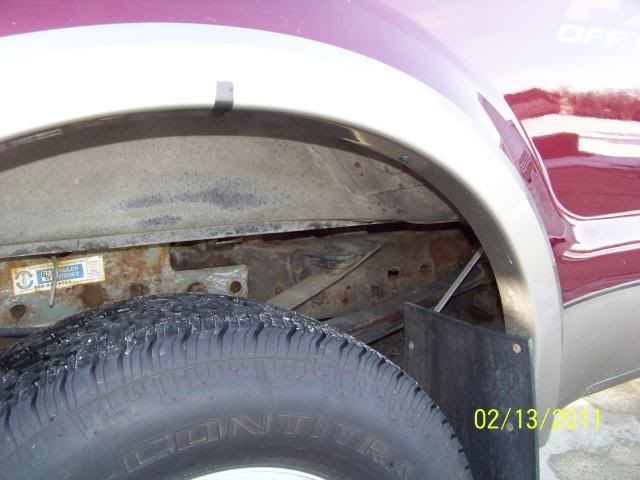
Front overload, off the frame hanger. It can touch if needed.
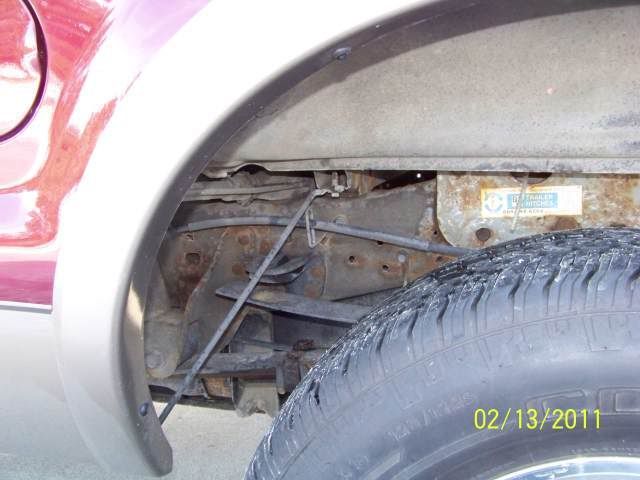
You did not say, if yours a dually or SRW's? I'm assuming SRW by your comments.
Hope this helps
John


