panther3505
May 05, 2015Explorer
Batteyr charging in an RV
Here's my rant for the day.
I have heard so much outright misinformation, misnomers, and just flat out uninformed individuals passing off their opinions as gospel regarding maintaining their batteries in their RV's. Hear are some cold hard facts from an electrical engineer.
1. RV’s do not have battery chargers; they have converters, which are nothing more than power supplies.
2. An RV converter does not know what a battery is. The batteries; when installed in an RV’s electrical system are in parallel with the electrical system and, therefore, are nothing more than an additional load on the system.
3. Regardless of current marketing ploys or manufacturer claims, no converter manufactured today by anyone can charge a battery separately from the 12v system, again the battery is in parallel.
4. There are no components in a converter that isolate the charging function separate to supplying voltage and current to the entire 12v system.
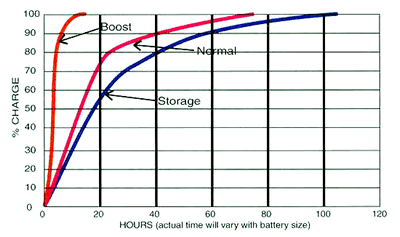
5. Current converter “multi-stage” technology offers no real benefit over a single stage converter. When viewing the charge curve of a single-stage versus a multi-stage converter, the charging is nearly identical. The only thing that stands out is the fixed points in which the output voltages drop, however, time and current are constant regardless of single or multi-stage. Even with more popular 4 stage converters on the market, the misnomers that abound in the RV world are frightening. According to major battery manufacturers, the voltages that are required to desulfate or equalize a battery need to be a minimum of 15.4VDC. Due to the limitations of an RV’s electrical system that is 13-14.4vdc, the voltages required to desulfate a battery would be detrimental the sensitive low voltage systems now inside modern RV’s.
I have heard so much outright misinformation, misnomers, and just flat out uninformed individuals passing off their opinions as gospel regarding maintaining their batteries in their RV's. Hear are some cold hard facts from an electrical engineer.
1. RV’s do not have battery chargers; they have converters, which are nothing more than power supplies.
2. An RV converter does not know what a battery is. The batteries; when installed in an RV’s electrical system are in parallel with the electrical system and, therefore, are nothing more than an additional load on the system.
3. Regardless of current marketing ploys or manufacturer claims, no converter manufactured today by anyone can charge a battery separately from the 12v system, again the battery is in parallel.
4. There are no components in a converter that isolate the charging function separate to supplying voltage and current to the entire 12v system.
5. Current converter “multi-stage” technology offers no real benefit over a single stage converter. When viewing the charge curve of a single-stage versus a multi-stage converter, the charging is nearly identical. The only thing that stands out is the fixed points in which the output voltages drop, however, time and current are constant regardless of single or multi-stage. Even with more popular 4 stage converters on the market, the misnomers that abound in the RV world are frightening. According to major battery manufacturers, the voltages that are required to desulfate or equalize a battery need to be a minimum of 15.4VDC. Due to the limitations of an RV’s electrical system that is 13-14.4vdc, the voltages required to desulfate a battery would be detrimental the sensitive low voltage systems now inside modern RV’s.