DryCamper11 wrote:
Here's the input circuit:
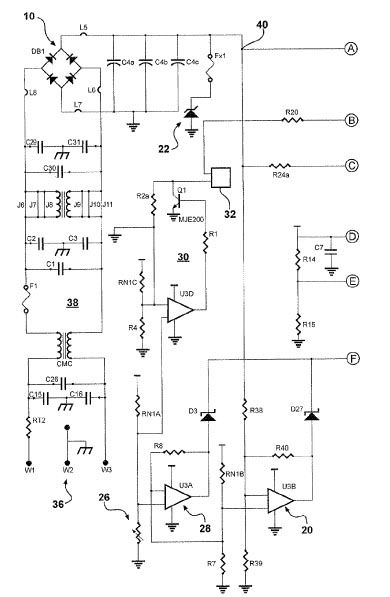
BTW, you might get a kick out of the part of the circuit marked with number 22. It's a fuse and a zener. The fuse is connected to the raw DC - rectified AC at about 170 VDC normally.
That part of the circuit does nothing unless you apply overvoltage to the unit (connect it to 240 VAC instead of normal 120 VAC) in which case the zener conducts, and the fuse blows. But the fuse doesn't seem to protect anything, and the unit works the same regardless of whether that fuse is blown or not. You have to read the patent to find out that it's there as a tattletale. :)
The customer can replace the real fuses (which also blow on overvoltage), but if he then sends the unit back and says it's busted, the manufacturer knows it was exposed to overvoltage. I found it to be amusing.


