Forum Discussion

turnkey2's avatar
turnkey2
Explorer
Apr 19, 2017

Batteries draining

I have a 2013 Thor Hurricane motorhome on an F53 chassis. Recently I discovered that the coach batteries (2 group 31 AGM 2 years old)were draining overnight from 12.9 volts down to 11.2 volts. Coach was not plugged into shore power. My chassis battery was also drained to where MH would not start. There were no loads except CO2 detector and clock on radio. I had the coach batteries test by the company I bought them from after charging them and they were fine. I also disconnected the batteries from converter/charger and tested the output; it read 13.6 volts which is what it should read. This happens every time I charge them and then unplug from shore power. I thought it might be a faulty isolator or solenoid but I can't find them. The coach also has a BCC model TH-1020. Is the isolator and solenoid in the BCC or elsewhere? I emailed Thor and have had no response! Any thoughts on what might be wrong?

10 Replies


  • Eliminates problems. Period. Unless you are unlucky enough to have chosen a newer Ford chassis. ECU reset needed at dealer.

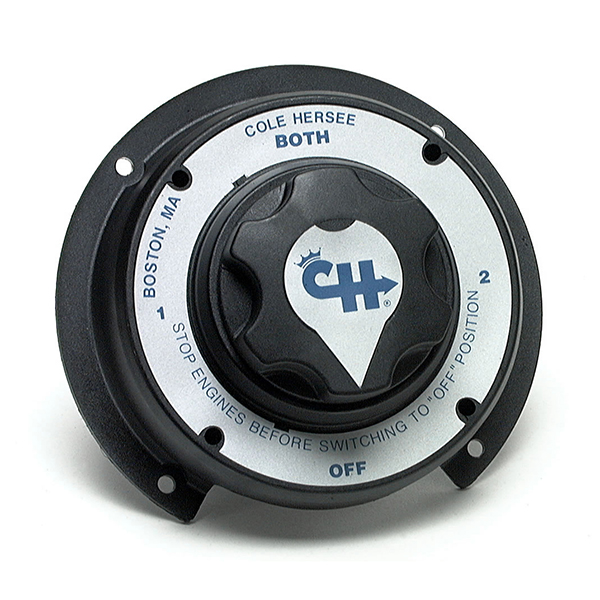
    I would not own an RV without having a total house/chassis disconnect
  • Do the levelling jacks and entry steps go through the disconnect switch? If not, can there be a draw from either of those things? (I don't have a MH) Say the steps can't get in all the way for some reason so they keep trying all night? The jacks don't shut off?

    Another thing on some RVs is heated tanks where they get left on.
  • There is no inverter in my coach. I unplugged shore power after a couple of days charging and used the battery discount to shut off all 12V in coach. Overnight batteries discharged. I purchased a AC/DC clamp on meter to try to trouble shoot. How do I check at battery end with this? Do I disconnect negative and the check positive with meter? Can you tell me what is the procedure? Thanks
  • Have you checked the voltage of each disconnected battery by itself?
  • Charge your batteries and disconnect them overnight. Check voltage in each in the am. Maybe one of them has a problem and is dragging the others down?

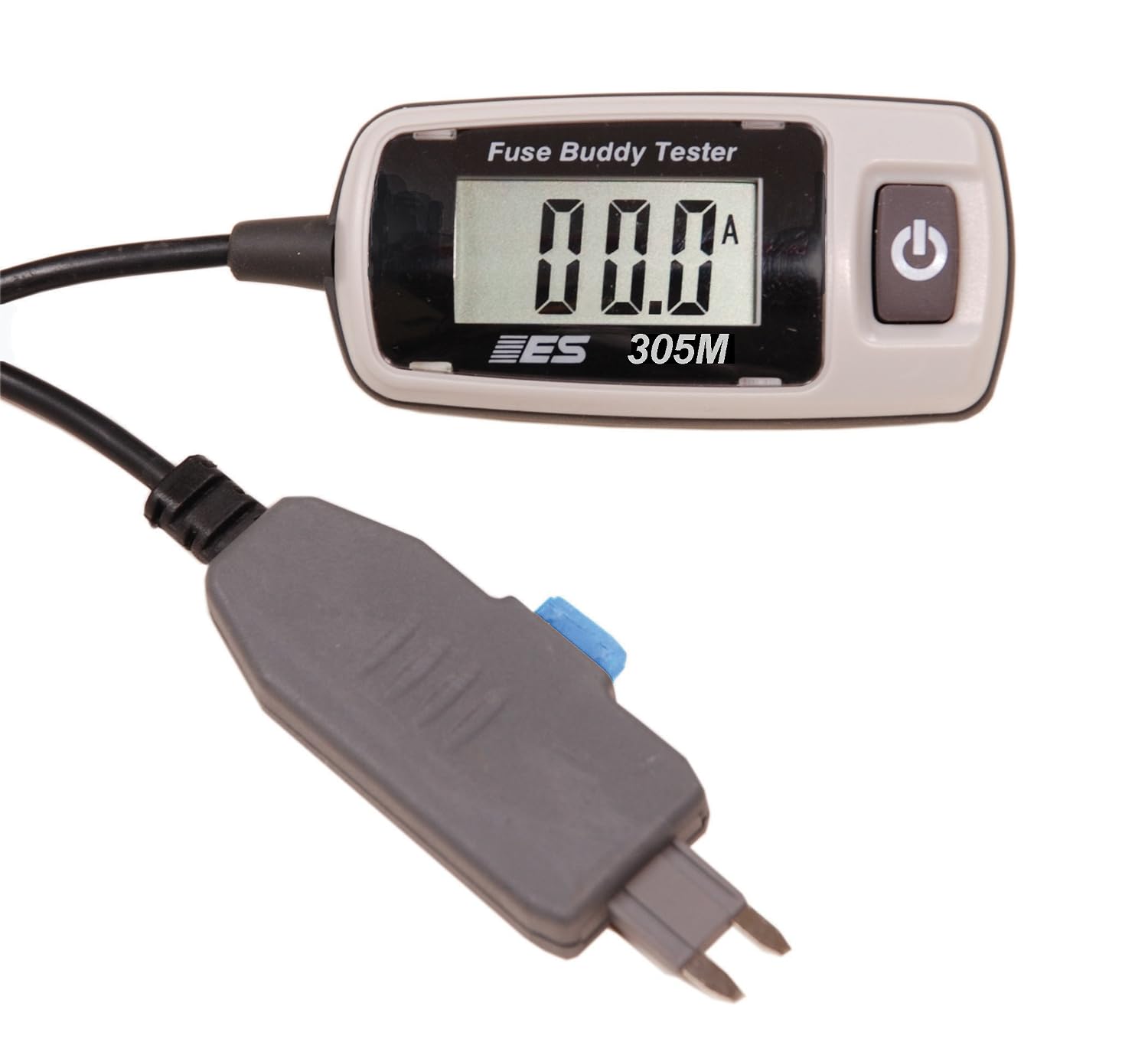
    To find DC draws per circuit, I have one of these: Fuse Buddy


    Just pull the fuse and insert it into the fuse buddy and plug it into the fuse block where you pulled the fuse. Measures amps.

    I've also just put an extra fuse in it so I don't have to keep swapping fuses. Hint: If you use needle nosed pliers to break away a little plastic from the opening, you can use full size fuses in this model, too. It fits in both the mini and full size sockets on a fuse block.


    See what is drawing on DC when everything is supposed to be off.
  • Kennyg wrote:
    BFL13 wrote:
    You left the converter on when you went to inverter from shore power?

    Might sound dumb but:How would you isolate the converter? Doesn't disconnect from shore power provide the isolation?


    I am guessing he does not have an inverter/charger, but a converter as he says. I am guessing he goes whole house on inverter when not on shore power.

    You need to shut off the converter when on whole house on inverter or the batteries will drain. The inverter draws more than the converter puts back in, so down you go. It takes a while to get all the way down, so you have time if you catch it soon after. BTDT. A clue is when you hear the converter's fan come on, or when you look at your Trimetric.

    How to isolate the converter? You can use its circuit breaker if it has its own, unplug it unless it is hardwired, or put a new switch into the black wire from the converter to the circuit breaker if it is hard wired.
  • RoyB's avatar
    RoyB
    Explorer II
    I have added one of those Sears Clamp-ON AMPMETERS that reads both AC and DC ups up to 400AMPS. In this case you would simply CLAMP AROUND the each of the wires that are connected to your battery POSITIVE terminals to see which cable is drawing down your battery. A great tool to have in tool box along with a standard multimeter...


    My multimeter is a FLUKE from my workiing days which is a high dollar item but just a $15-$20 multimeter from the many dept stores (LOWES-WALMART-AMAZON) will work just fine...

    There is another possibility that your batteries have boiled out their fluids by having 13.6VDC applied over time... This is known to happen and I usually check my battery fluids on a regular every couple of weeks basis. I also do a walk-around sometimes on a daily basis and make note if any fluids are present around the batteries.

    In my case when stored I have a complete battery manual disconnect engaged at the main battery switch. My setup does however have a couple of cables always connected to the positive terminals being my roof raise switch, 12VDC connection to my break-away assy that would apply 12VDC to the electric brakes, and a 12VDC connection coming from the 7-way Truck cable junction box that would allow my batteries to get a trickle charge from my truck start alternator system when the truck is running...

    In my case with everything still hooked up in my trailer and I leave my batteries connected I will start seeing them going down in 12vDC Voltage after just a few weeks without a trickle charge source applied... A fully charged battery should read 12.6-7VDC across the terminals and if you let they drain below their 50% state of charge (around 12.0VDC) then internal damage to the deep cycle batteries will start occurring. Also in my case when I had a single mode converter/charger always on shore power when my trailer was sitting at home the 13.6VDC would start boiling out my battery fluids after a month or so and if the fluid levels get below the internal battery cells then the possibility of getting a shorted cell can happen. This is usually a game-over situation for the battery. I have lost one in my battery setup when I first got my trailer with four batteries installed on the tongue area. The industry has discovered that if your trickle charge is 13.2VDC the boiling out of battery fluids is much reduced. This is now part of the industry standards DC voltages for the smart mode multimode converter/chargers units.

    Since 2009 after I installed a good brand Progressive Dynamics Converter/Charger (PD9260C 60A model) I can almost ignore my simple battery maintenance checks etc. They are all the same now but out of habit I still make my simple checks listed above...

    During the long winter months I usually just switch out my batteries and leave them on my trailer tongue of my off-road trailer and the DC VOLTAGES will drop from 12.6-7VDC down to around 12.4-5VDC over the winter months completed disconnected..

    Comments here all based on my experiences...

    Roy Ken

  • BFL13 wrote:
    You left the converter on when you went to inverter from shore power?

    Might sound dumb but:How would you isolate the converter? Doesn't disconnect from shore power provide the isolation?
  • You left the converter on when you went to inverter from shore power?

About Technical Issues

Having RV issues? Connect with others who have been in your shoes.24,354 PostsLatest Activity: Jan 24, 2026