To answer why diff ratio and MTWR are inter-related...here is an old
thread on that subject that has a chart showing the differences
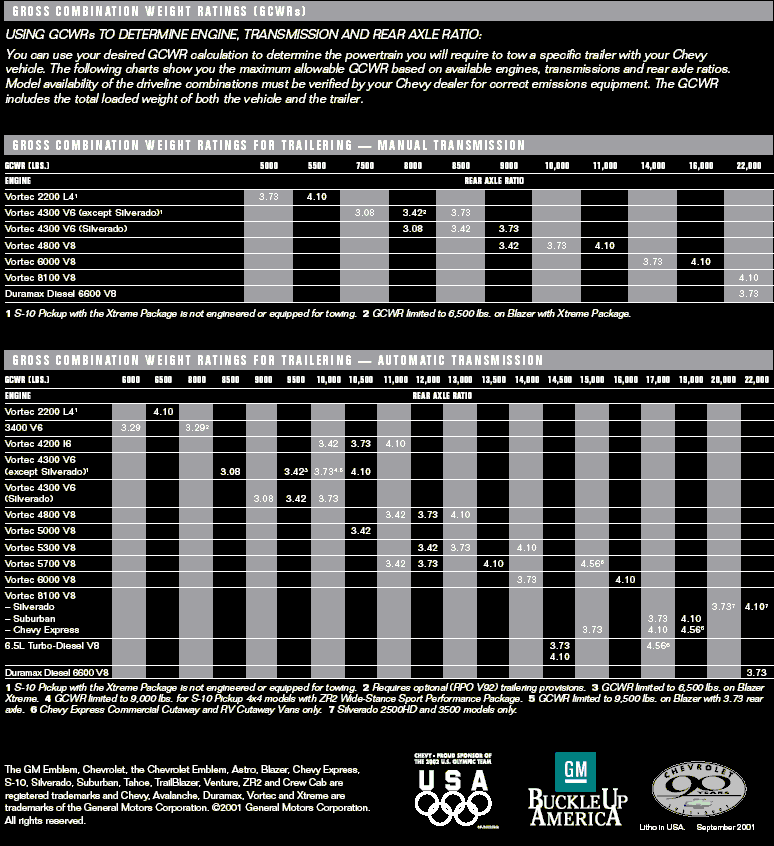
A chart for GM TV's, but all OEMs have similar for their TV's...
changing gear ratio? myth?quote from above link
benk wrote:
Posted: 01/25/13 11:22am
Yes, changing your diff ratio will change the MTWR and GCWR, but
missing is the context of the whole system, which is everything from
the diff ratio, to the frame sizing, to the spring sizing (not just
eyeball, but thickness, arch, alloy, width, length, etc), or the
drive train (that includes the engine), etc, etc, etc
Too many take these ratings as an absolute. Meaning that since my GMT400 1996
Suburban has a MTWR of 10,000...it applies to all conditions for my Suburban
No, it does not and depends on the other factors involved.
If I load up my Sub to it's 8.6K GVWR before hooking up. There is no rating
left for the trailer tongue/hitch weight.
That is if I believe in the ratings system, which I do. If not, then I'll do
whatever and ignore that 10,000 MTWR for an empty, no optioned Suburban. I'm
close enough (180lbs) to the 150lb driver they used to derive their ratings
This is a good thread concerning weights vs ratings and how they work.
Too many think just changing the diff ratio is all there is, but do
not understand that in that chart has baked into it sizing that is
transparent. Say for a 2500 means the everything is bigger than for
the 1500 (frame, drive train, suspension, etc)
Or that the Suburban vs Express Van, both with the 8.1L big block
has different 4.1 GCWR/MTWR's. What is the difference based on? We on
the outside will never know and just guessing
GCWR...where, oh where
This is the GCWR for GM vehicles, year 2001. NOTE that there
is fine print that modifies all of those columns and rows
howmuchcanitow GCWRchart


