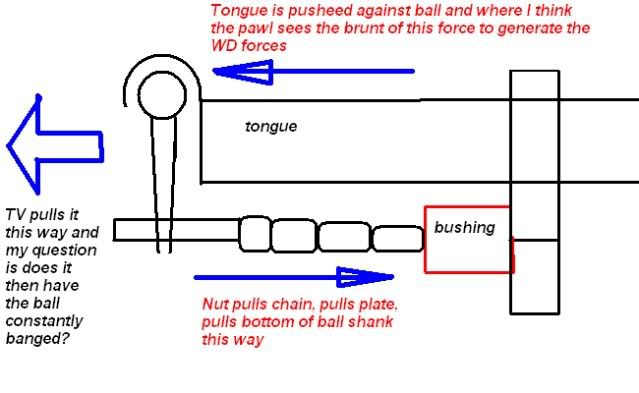
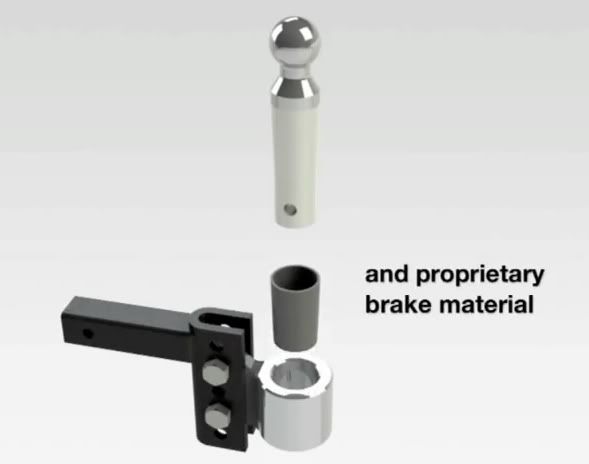
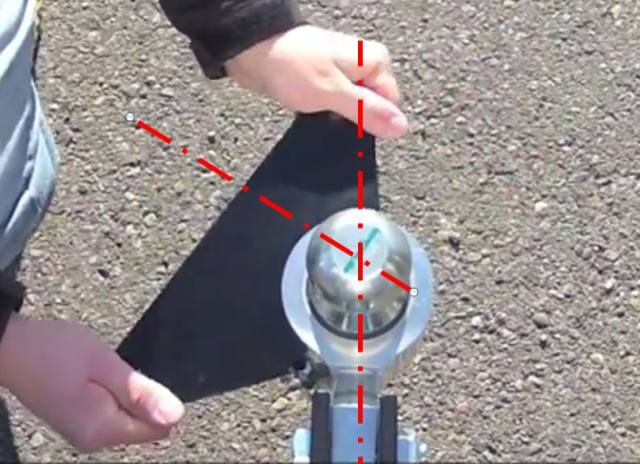
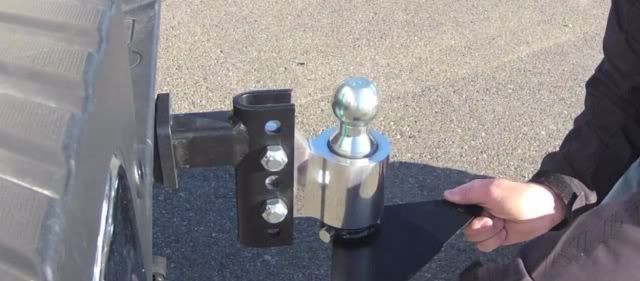
Hi Rexloin and Centerpin
Let me add a few things to maybe help. In the world of force analysis the terms "force" and "reaction" are used. The directions of both are exactly opposite each other.
Reaction of ForceUnless one is "into" this type of analysis it can get confusing which way is which. Many people can understand the force direction as they can see it or relate to it.
For example a simple cloths line. The cloths hanging on the line creates tension in the rope and the tension or "force" is pulling on the hook screwed into the side of the house or pole. Most can relate to the "force" in the rope as they can see it or have experienced it. The hook in the wall has a "reaction" (or a reacting force) which is resisting being yanked out by the "force" of the cloths pulling on the rope. If the wood around the screw of the hook cannot resist the force, the wood rips out because the reaction force at the hook was greater then the wood could handle.
Trying to explain to someone by arrows on a screen can be confusing if you do not know if they are talking about the force or the reaction. Especially if they did not declare which was which. Or if you are not into doing this by mathematical or graphical expression it can be hard to understand. OK enough of this....
Let's try this. See this picture

In order for WD to occur on the TV, the WD hitch has to create a rotational force (or torque) in the TV receiver cross tube. You can see the CW arrow there. At this point it does not matter which brand WD hitch you have that same torque needs to occur to create WD.
WD on any hitch (that I can think of) requires the use of levers to create mechanical advantage. The longer the lever the higher the mechanical advantage and the less force it takes pulling on the lever.
For simplicity sake lets look at the traditional WD hitch like in the picture above. The trunnion WD bar is 28.5" long from the tow ball center to the snap up chain. That 28.5" is a lever. It can be thought of a 28.5 to 1 mechanical advantage so to speak. So far so good?
Now lets look at the Anderson WD hitch
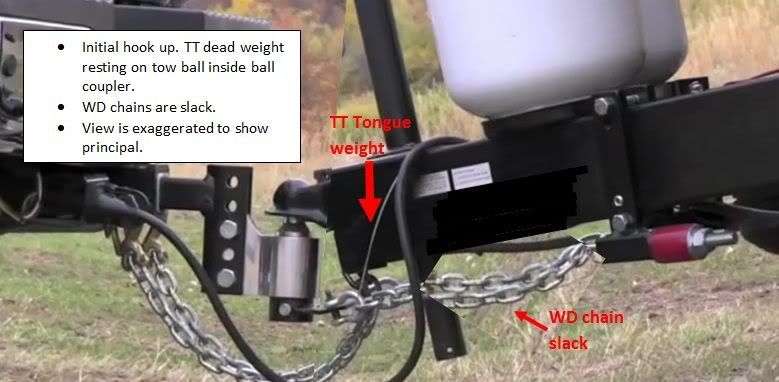
Here we are with the chains slack
And now we start to crank the nut behind the urethane spring which creates tension in the chain.
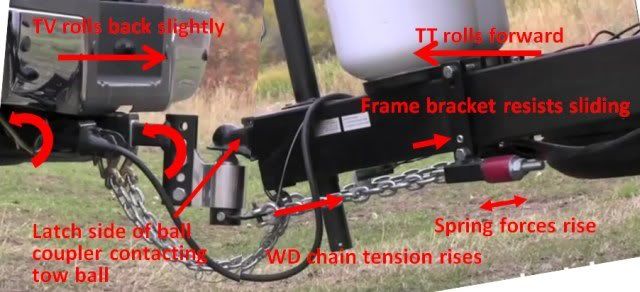
WD on the TV still works the same in the receiver. We still have to create the same torque in the receiver in order to apply WD on the TV to the same axle weights. Since the tongue weight has not changed on the TT because of hitch brand we still need to create the same amount of torque in the receiver to transfer weight off the rear axle of the truck, some to the front axle some to the TT axles.
Now how does the Andersen hitch create this torque?
The tow ball is estimated to be 8" long from the ball center to the chain attachment point. I created this estimate by looking at the relationship from pic's of the 6" wide A frame. It "might" be an inch or so longer and the longer the better.
If you pull hard enough towards the TT on that 8" long tow ball shank it will start to create a rotary force (torque) in the hitch shank and the TV receiver. In the case of the Andersen this would be a 8 to 1 mechanical advantage.
Up above on my Reese hitch I have 28.5 to 1 and on the Andersen we have 8 to 1. Looking at the difference in the 2 mechanical advantages 28.5 / 8 = 3.6 times difference. OR that it will take 3.6 times more force to pull on the 8" long tow ball shank then on the Reese to create the same torque as measured at the tow ball.
Now putting some numbers to this.
If on the Reese it took 1,000# of force pulling on the chain at the end of the WD bar (the snap up area) that would be 28.5" x 1,000# = 28,500 in. lb (2,375 ft lb.)of torque in the hitch shank at the tow ball area.
Since we created 28,500 in. lb of torque at the tow ball area to do the job of WD by the Reese hitch, the Andersen has to create this same torque to do the same WD at the tow ball area.
Since the lever length is only 8" long in place of 28.5" long we have to pull harder. 28,500 in. lb / 8" = 3,563 # of force is needed in the Andersen WD chains to create the same equivalent WD on the TV.
This example was only one side of the hitch. Both sides in the conventional WD hitch and the Andersen create equal forces in the chains when the TV is straight ahead.
A concern of mine on the Andersen now realizing how high the forces for WD need to be is, the frame brackets that attach the urethane springs to the frame. They need to be strong enough attached to not slide down the frame. They do have a set screw to bite into the frame rails. On tube frame you can bite in on the inside and outside. On C channel you can only bite in on the outside. In the hitch instructions it is stated.
"A good option to strengthen and secure the hold of the set screws is to pre-drill a 7/16" (11mm) hole into the frame where
the set screws will be located."
They do not declare when to drill just it is a good option. Odds are high they where wanting to create a no drill method of attachment. The reality is this area has to be positive and no slip. I will give them credit as they at least mentioned it. On my Reese if the TW approaches 1,200# Reese allows you to bolt the snap up to the frame. As the snap up can spring open in a turn under certain conditions. The only way you find this out is calling tech service and asking or talking about a sprung open snap up. Then they tell you it is OK to bolt the snap up's on. :S
Andersen made a good effort at creating a large clamp force to hold the spring brackets to the frame. They are using 5/8 bolts torqued to 150 ft. lb. to create the squeeze and a set screw to create more positive attachment. On my big 6" channel frame it can take the squeeze, however the 1 size fits all may not apply on all TT's. I would be cautious of this high squeeze on thin wall tube A frames of ultra light TT's. Tube crush can and has occurred while even tightening up snap up brackets on the conventional WD hitch.
With the differences in force needed to accomplish WD on the truck, the Andersen will have to work harder at it, 3.6 times higher then the conventional WD hitch. In theory it can do it. In practice if it can obtain it and sustain it is yet to be proven.
If I have confused you even more.... let me know. I'll try and break it down simpler if needed.
Hope this helps
John
PS. For purposes of this example I did not include the distance from the center of the tow ball to the center of the receiver torque tube in the mechanical advantage comparisons. The shorter the shank the less mechanical advantage you have on either brand hitch.
Moderator edit to re-size picture to forum limit of 640px maximum width to avoid scrolling..