OK, I'll explain again how air gets in the LP lines- and it is air when you have to leave a stove burner on for 30 seconds before it will ignite.
30 years ago, all the LP appliances had manual, positive shutoff valves. These systems would hold pressure nearly forever- they just didn't leak.
Now, however, we have electronic controls, using LP valves that simply are not near perfect at sealing. As far as safety goes, they don't leak anywhere near enough to be dangerous, but they leak, none the less. Below is a cutaway of the type of valve that is used-(with one exception) Note that in the direction of flow, only the spring pressure and pressure of the LP is keeping the valve closed- and with the valves we use, the springs are not strong at all, thus they don't draw much current to operate. Also note that there is no resistance to pressure flowing in the opposite direction- they are like check valves.
So- the LP leaks out, the line pressure actually goes below atmospheric pressure, because LP gas is very temperature sensitive, thus air is drawn back in to the system.
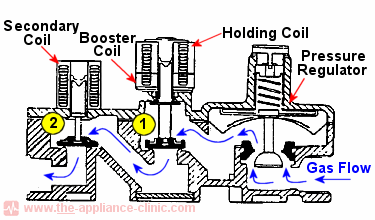
* The difference in the valve illustrated is that it is for a household appliance, is 24 volts, and has an extra strong spring, so has a "booster" coil to pull it open. Lots more watts used, but less leakage (if any).



