Jack update: I installed the new 4600s and the camper raises and lowers like new, as you'd expect. The 4600 quick release seems to work OK, BTW. A couple of minor complaints though. First of all, the plastic plug/axle opposite the motor release handle on one of the jacks is defective - the head is missing and there is a gap there that will admit water. I'm hoping Happijac will just mail me a new one. Secondly, after I mounted the first jack, I couldn't get the motor to slide down inside the tube. Apparently they punch rather than drill the holes for the motor releases and the punching operation pinches the top of the tube so it is narrower than the motor housing. I had to remove the jack and use a hammer and wooden block to expand the pinch. The motor then fit fine. Also curious that the pair of jacks came with a crank and z brackets, etc, but no square plastic plug for the top of the tube in case you weren't going to motorize them.
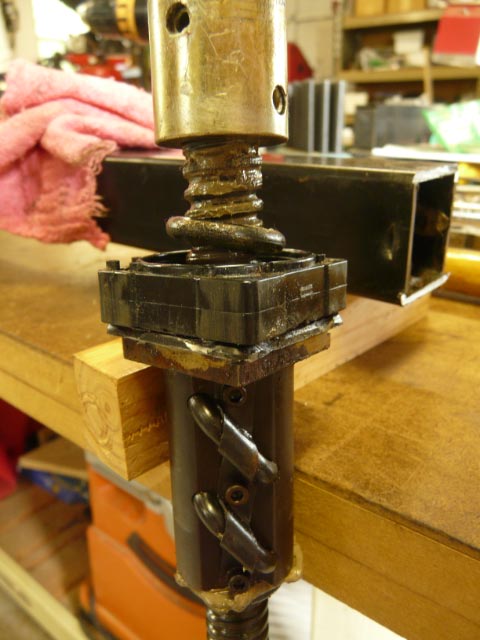
As promised, I took apart the lower leg of the bad 4500 jack to get a closer look at the inside. At the top of the leg there is a re-circulating ball mechanism that is peened into the top of the lower leg. Instead of trying to reverse the peening to get the mechanism out, I decided to use a quicker, destructive method. I sawed into the square tubing just below the peening on all 4 sides. I used my horizontal bandsaw to cut it. The result is that the RB mechanism came out with about a 1/8" section of the leg attached. I have not removed the RB mechanism from the shaft as I suspect this would release all of the balls. In fact, I did back it off far enough to see the balls and managed to remove one of them. As I suspected, the ball is rusty and pitted from moisture intrusion.
The picture below shows the RB mechanism. In the background you can see where the bottom leg was cut.
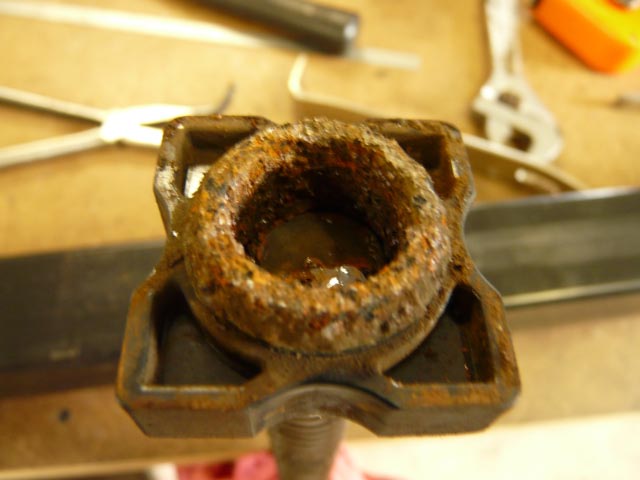
The next picture shows what is at the bottom end of the acme rod. Note all of the rust on that end.
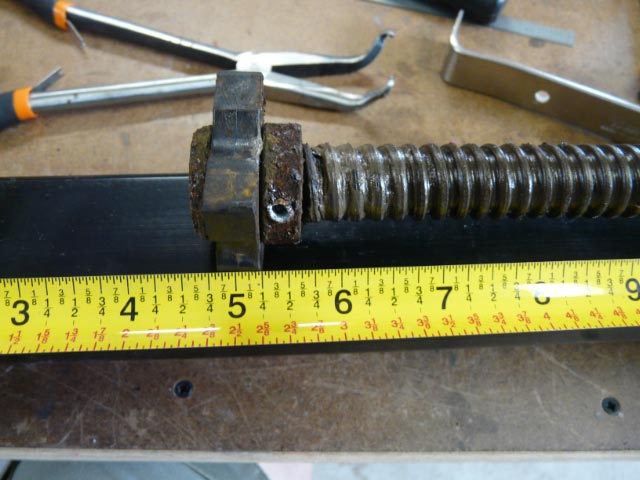
The next picture shows where the bottom end of the rod is when the jack is fully lowered. The tape measure shows the distance from the top of the foot pad. The only way to lube that plastic-to-metal friction point would be to drill a hole in the bottom leg at this point in order to be able to spray lube it. Note that you would still have to disassemble the jack in order to get to the hole.
The picture below shows what came out of the lower leg when I turned it upside down and tapped it on a shop rag on the floor.
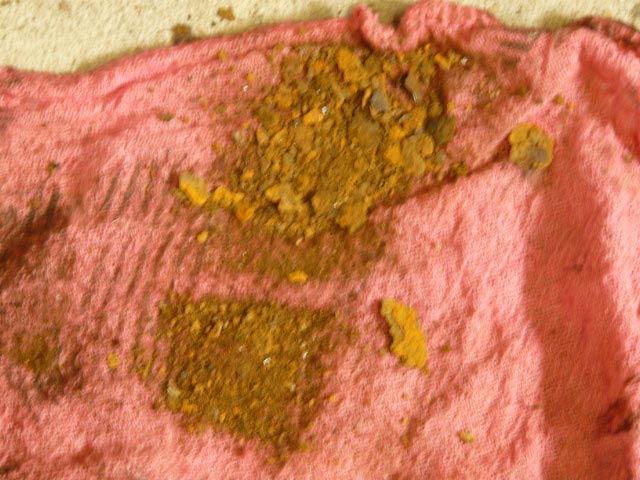
From these pictures you can see that there has been a considerable amount of moisture in the lower leg over the years. Would a hole drilled into the bottom of the foot pad allow any accumulated moisture to run out?
Again, I would suggest when storing, or traveling, to keep the jacks fully retracted so the O ring at the top of the RB mechanism seals tightly. This keeps the acme rod all the way down inside the bottom leg and also keeps any intruding water from running down into the RB mechanism. One or both of these apparently caused the failure of my jack.
-jj