Forum Discussion


professor95
Aug 16, 2010Explorer
Electric Start is nice - but, you gotta have a battery to turn the starter.
The battery needs to be charged or the starter doesn't work.
To charge the battery, there is a coil behind the engine flywheel. The coil is sized to provide about 14 volts of alternating current when the engine is running at 3,600 RPM.
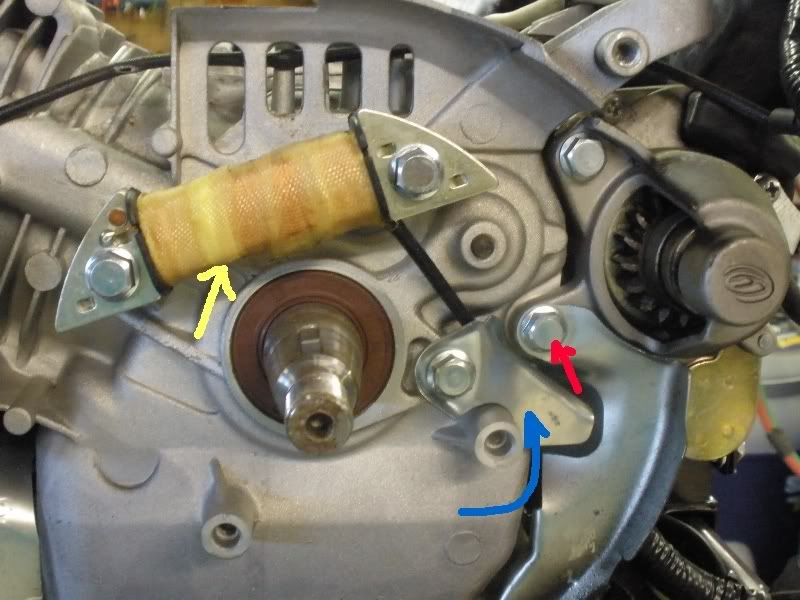
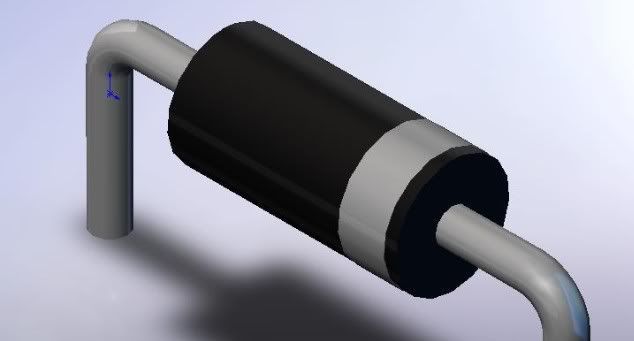
The alternating current from the little coil must be changed from AC to DC to charge the battery. To accomplish this transition, a single diode is used as a rectifier. This is what a common silicon P/N junction diode looks like:
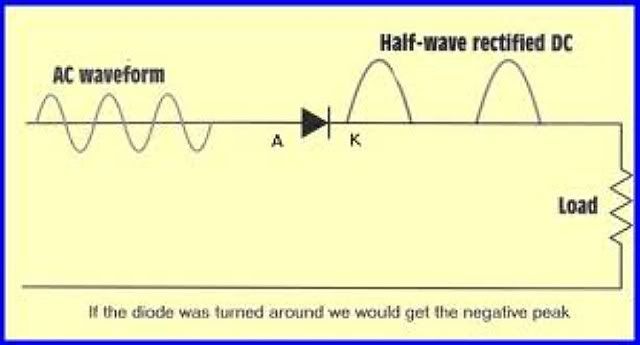
The diode "clips" the negative part of an AC sine wave so that the output is a "pulsed" DC
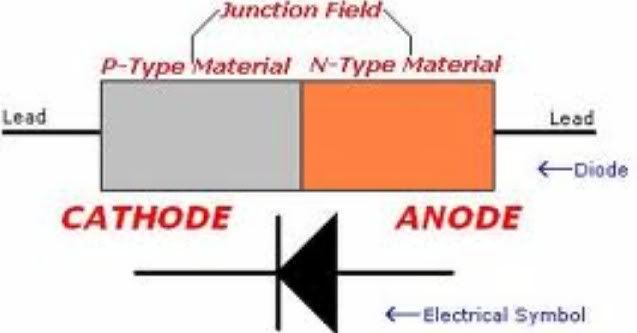
The silicon diode has a cathode and anode. It is referred to as a Positive-Negative Junction Device due to its physical make-up. We shorten this to simply P/N Junction Silicon Diode.
While this works, it is not the "BEST" way to take care of your electric start generator battery.
For starters, the charging circuit is unregulated. The voltage to the battery can vary by several volts depending on the accuracy of the charge coil construction, strength of the magnets in the flywheel, and of course engine speed.
We also know that simple charging circuits such as this type often result in parasitic loss from the battery when the unit is not used frequently. One such route of loss is leakage through the P/N junction of the rectifier diode back to the coil. Translation: The battery goes dead when the unit sits.
I learned several years ago when I first bought my Champion 40008 electric start generator NOT to depend on the charging circuit to maintain the battery. In fact, I have the diode clipped on my electric start pressure washer, 40008 and 7,500 watt home generator so there is no charge voltage from the internal flywheel coil or parasitic loss back through the circuit when it is sitting. I intend to do it soon on my newest electric start/remote control generator.
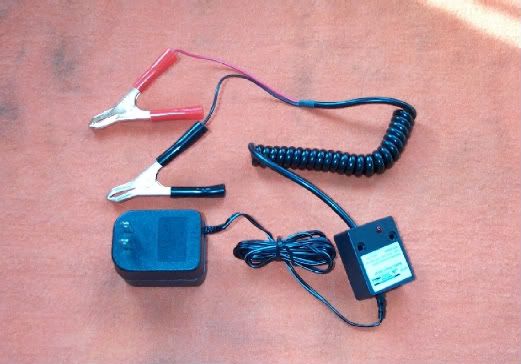
What I do is connect a FLOAT CHARGER to a fully charged battery. Unlike a "regular" battery charger a float charger will supply enough current and voltage to maintain the battery at 12.8 volts without overcharging. A float charger can measure battery voltage and cut on and off as needed to replace normal discharge and parasitic loss. Float chargers are NOT intended to recharge dead batteries. They are designed to keep a charged battery charged.
Float chargers can be purchased from Harbor Freight for $10 - often less when they are on sale. Or, you can purchase a more expensive Battery Tender Junior..
I have at least a dozen of the HF Float chargers in use on my boat, tractor, 7,500 Watt generator, mowers, seldom used cars, etc. For the $$$ they do a good job of maintaining battery charge and overcoming normal parasitic losses. You may, of course, leave the OEM charging circuit on the generator "AS IS" and just connect the Float Charger to the battery when the generator is sitting. This will assure a battery charged enough to start the generator when needed. Without the use of a float charger, you may find yourself pulling the rope rather than pressing the button.
Do yourself a favor and invest in a Float Charger - not a trickle charger or conventional battery charger. Both of the latter can overcharge a battery ruining it forever. Of course, an (expensive) four stage "intelligent" battery charger is OK but is pretty much overkill for the small generator starting battery.
The battery needs to be charged or the starter doesn't work.
To charge the battery, there is a coil behind the engine flywheel. The coil is sized to provide about 14 volts of alternating current when the engine is running at 3,600 RPM.
The alternating current from the little coil must be changed from AC to DC to charge the battery. To accomplish this transition, a single diode is used as a rectifier. This is what a common silicon P/N junction diode looks like:
The diode "clips" the negative part of an AC sine wave so that the output is a "pulsed" DC
The silicon diode has a cathode and anode. It is referred to as a Positive-Negative Junction Device due to its physical make-up. We shorten this to simply P/N Junction Silicon Diode.
While this works, it is not the "BEST" way to take care of your electric start generator battery.
For starters, the charging circuit is unregulated. The voltage to the battery can vary by several volts depending on the accuracy of the charge coil construction, strength of the magnets in the flywheel, and of course engine speed.
We also know that simple charging circuits such as this type often result in parasitic loss from the battery when the unit is not used frequently. One such route of loss is leakage through the P/N junction of the rectifier diode back to the coil. Translation: The battery goes dead when the unit sits.
I learned several years ago when I first bought my Champion 40008 electric start generator NOT to depend on the charging circuit to maintain the battery. In fact, I have the diode clipped on my electric start pressure washer, 40008 and 7,500 watt home generator so there is no charge voltage from the internal flywheel coil or parasitic loss back through the circuit when it is sitting. I intend to do it soon on my newest electric start/remote control generator.
What I do is connect a FLOAT CHARGER to a fully charged battery. Unlike a "regular" battery charger a float charger will supply enough current and voltage to maintain the battery at 12.8 volts without overcharging. A float charger can measure battery voltage and cut on and off as needed to replace normal discharge and parasitic loss. Float chargers are NOT intended to recharge dead batteries. They are designed to keep a charged battery charged.
Float chargers can be purchased from Harbor Freight for $10 - often less when they are on sale. Or, you can purchase a more expensive Battery Tender Junior..
I have at least a dozen of the HF Float chargers in use on my boat, tractor, 7,500 Watt generator, mowers, seldom used cars, etc. For the $$$ they do a good job of maintaining battery charge and overcoming normal parasitic losses. You may, of course, leave the OEM charging circuit on the generator "AS IS" and just connect the Float Charger to the battery when the generator is sitting. This will assure a battery charged enough to start the generator when needed. Without the use of a float charger, you may find yourself pulling the rope rather than pressing the button.
Do yourself a favor and invest in a Float Charger - not a trickle charger or conventional battery charger. Both of the latter can overcharge a battery ruining it forever. Of course, an (expensive) four stage "intelligent" battery charger is OK but is pretty much overkill for the small generator starting battery.
About Technical Issues
Having RV issues? Connect with others who have been in your shoes.24,371 PostsLatest Activity: Mar 20, 2026